In New York City, tennis is one of the last functioning civic experiments—a resilient mix of public access and private obsession that, somehow, still mostly works. For $100 a year (less if you’re young enough to bounce or old enough to creak), you’re issued a small card sized permit that grants access to over 500 public courts scattered across the five boroughs. Some courts are cracked and noble, others freshly resurfaced with the satisfying squeak of new paint—but all are equally available. No country club pedigree needed. No club dues. No whispered invites. No concierge. Just the permit, a racquet, and a little grit.
The 96th Street Courts
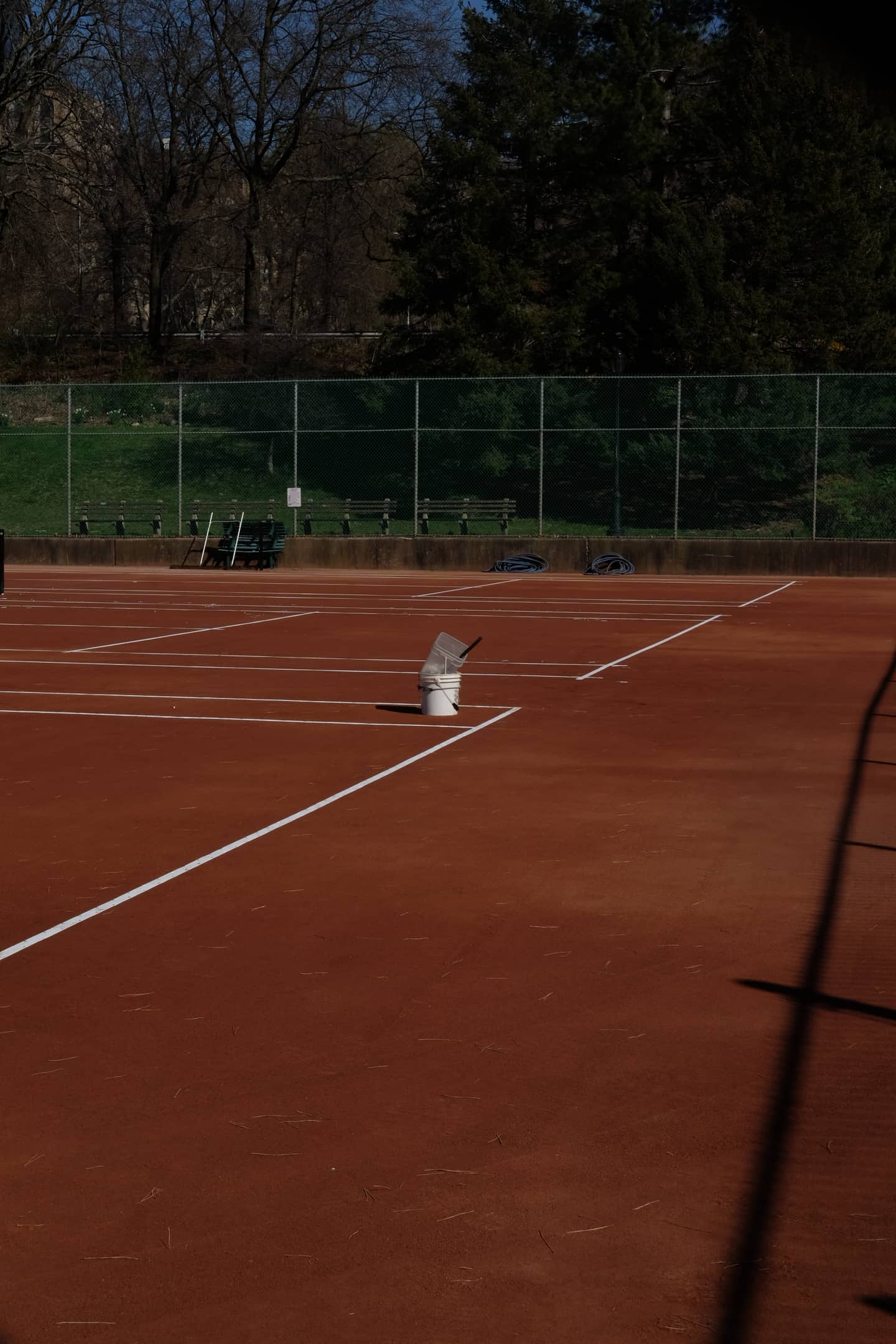
96th Street Clay Courts
In Manhattan, court access is its own soft science. Early risers line up at Central Park’s North Meadow before the sun is up, hoping to snag one of the coveted first-come-first-served slots. On the East Side, the Brian Watkins courts attract a mix of serious hitters and curious passersby, where community trust fills the vacuum of formal enforcement (until the Parks Department shows up, at which point everyone becomes miraculously rule-abiding).
Central Park
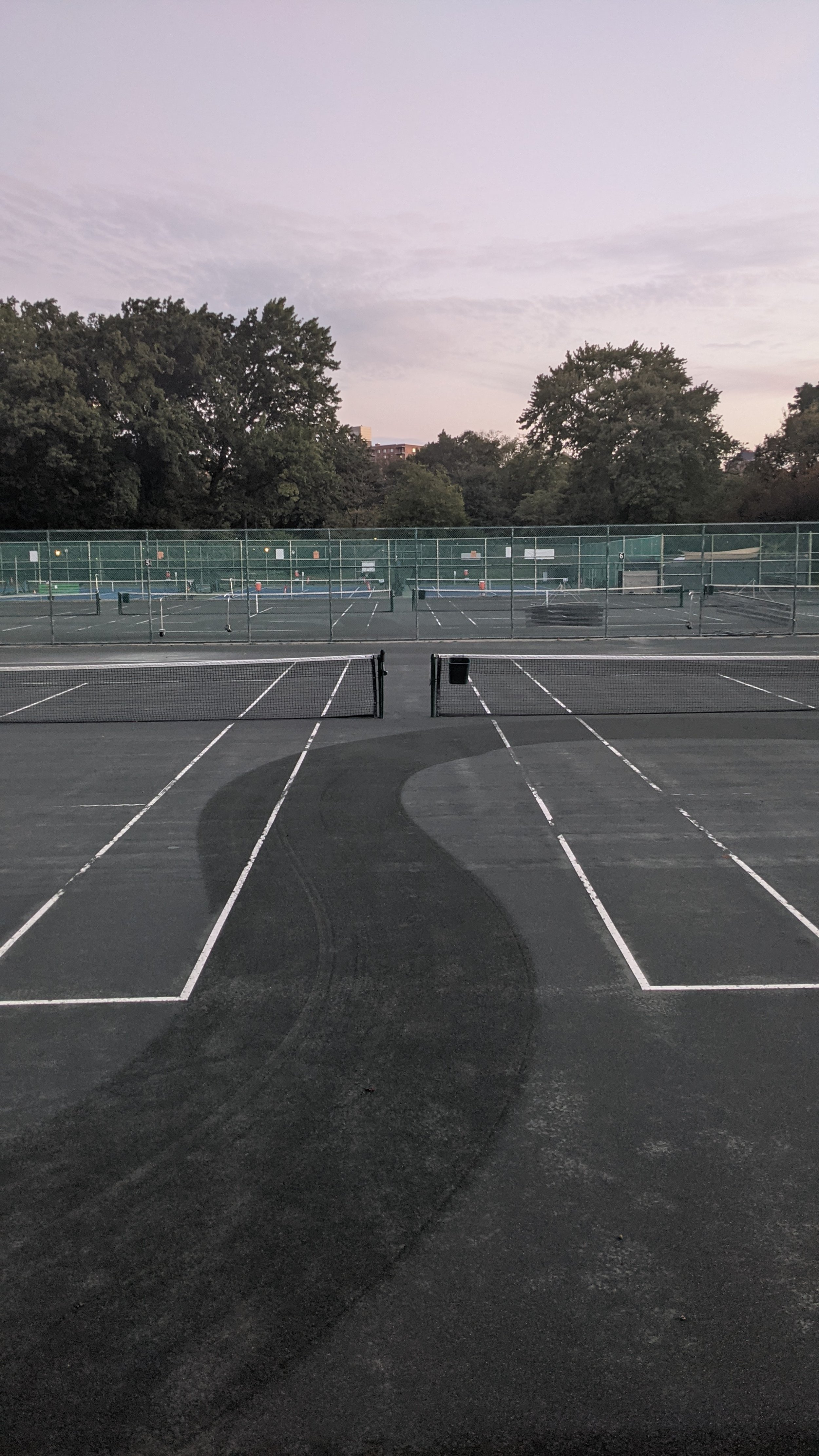
Central Park
At Riverside, players often form informal queues, marked by benches, towels, or just an unspoken agreement about who’s next. Some courts are walk-up only. Others, like Midtown’s Sutton East (technically inside a bubble under the Queensboro Bridge), can require online booking through the NYC Parks website—a process that’s equal parts hope, refresh-button persistence, and browser tab roulette.
Hudson River Park
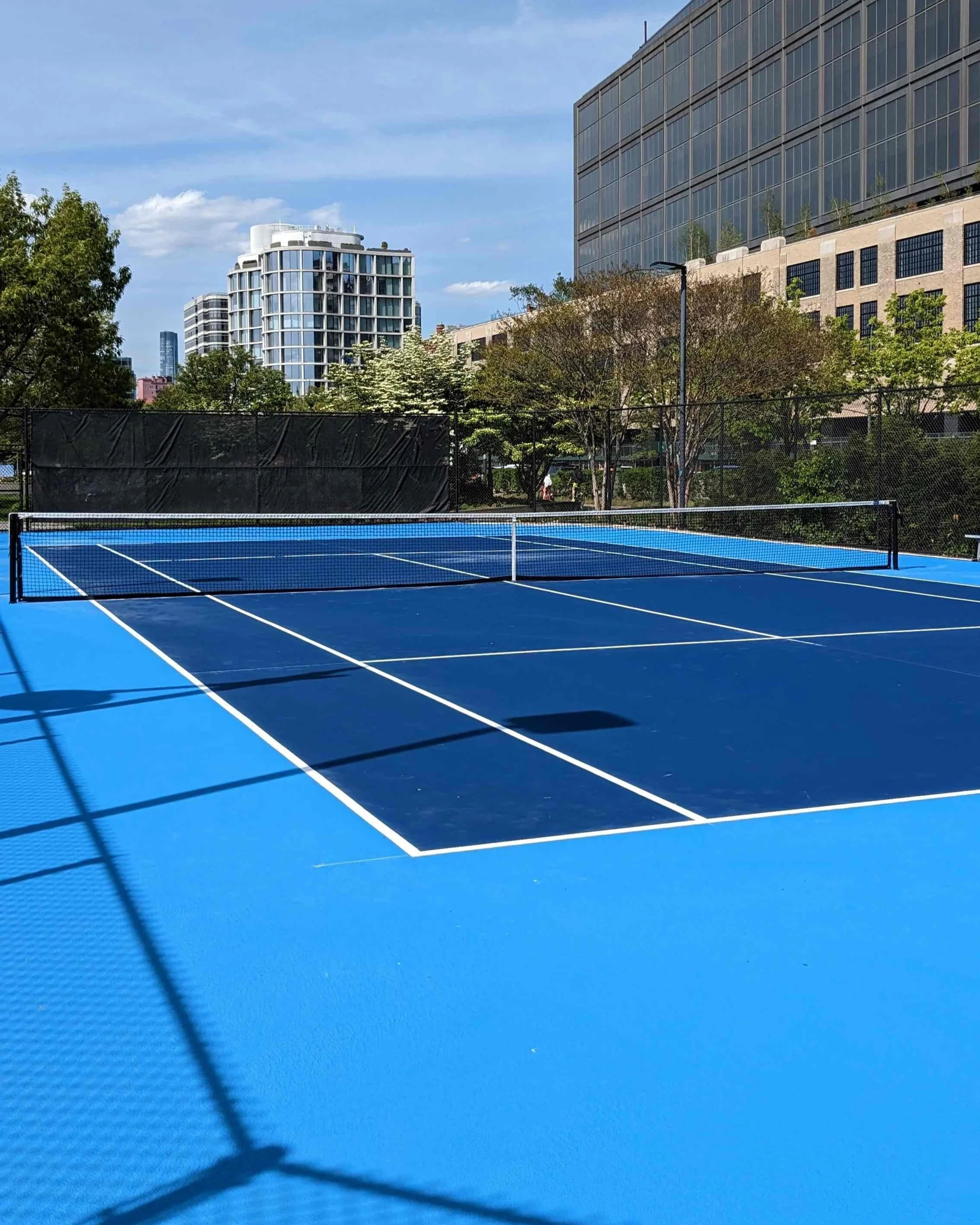
Hudson River Park
And while the systems vary, the ritual is the same: racquet in hand, permit in pocket, looking to rally with a Wall Street analyst, a retired cabbie, a Columbia grad student, or a grandmother from Queens in a sun visor and Asics. Everyone slices, grunts, and laughs in the same city arena.
It’s a democracy of topspin and dreaded double faults—still thankfully intact.